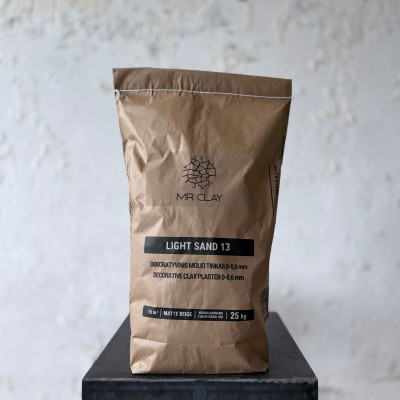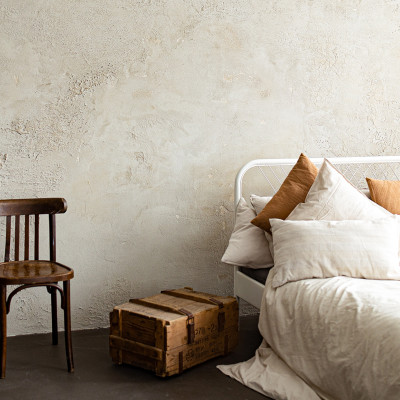
Clay plaster mixtures are designed to be completely natural and vapor-permeable. However, this does not mean they cannot be used simply as decorative plasters to create beautifully designed walls and be varnished with a protective coating, just like any other plaster.
Not at all – and we’re always happy when people consciously choose to keep a completely natural wall finish in their homes.
Clay plaster is a natural mixture without harmful chemicals, and it is fully vapor-permeable. This means cleaning it differs from materials that form a sealed film on the surface. Even though it’s natural, this does not mean it will wear out quickly — it depends on your lifestyle, habits, and maintenance.
We can sincerely say that such walls are delightful — they make you want to touch them, and the atmosphere at home feels very cozy.
Learn more about caring for and repairing natural clay plaster walls [HERE].
Clay plaster should be varnished when used in commercial or public spaces, where people may not realize it is a natural wall finish and therefore might not treat it carefully.
It is also strongly recommended to varnish any decorative objects or furniture finished with clay plaster.
Certainly not. The purpose of the varnish is to completely seal and protect the surface from possible liquid or dirt absorption. Although this varnish is highly durable, it is safe to use and complies with all current regulations.
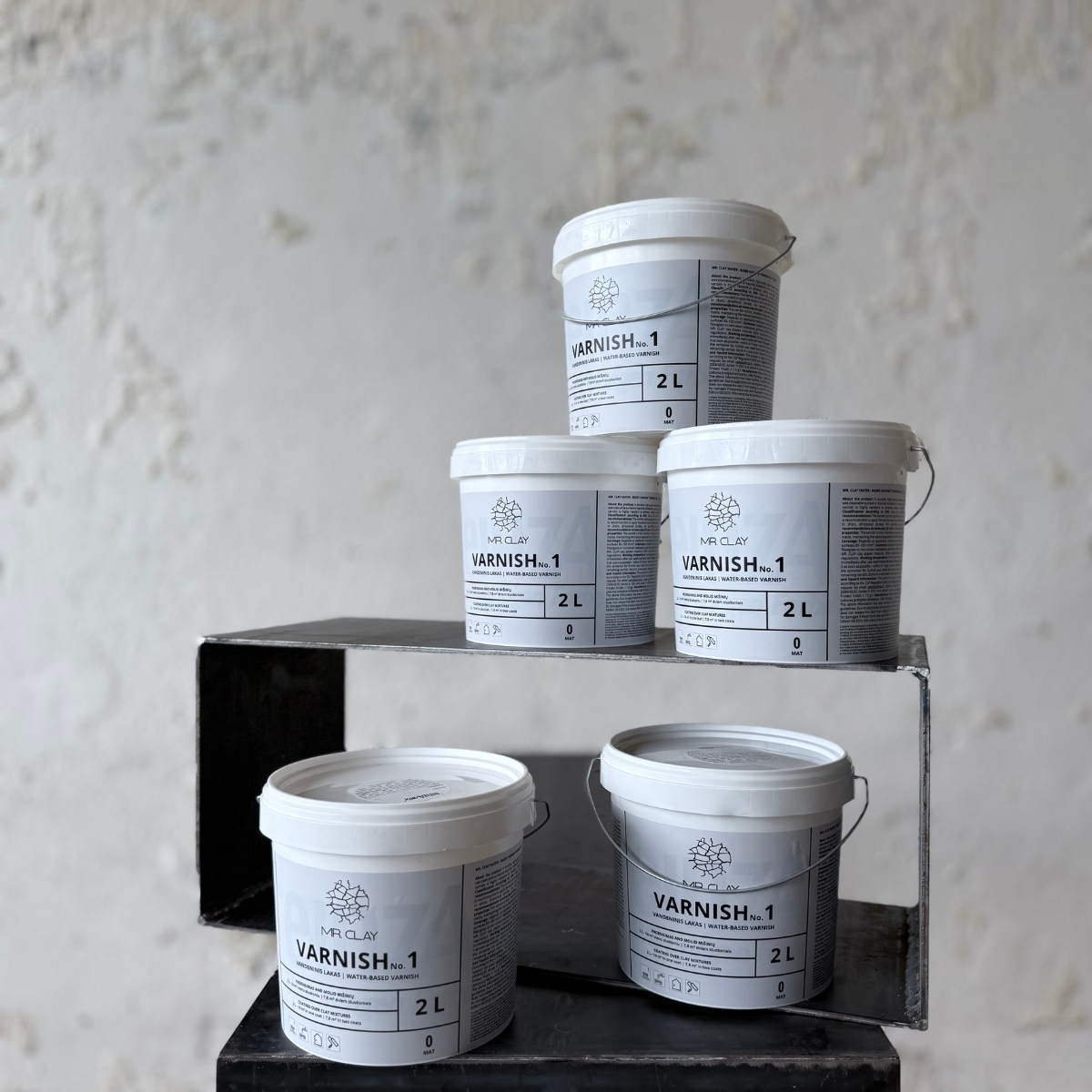
Mr. Clay Varnish No. 1 is an acrylic varnish made by the German manufacturer Einza, based on water.
We are very pleased with this varnish, as we had been looking for such a product for many years—one that:
Varnish goes onto the dried surface and protects it from the outside: from dirt, liquids and cleaning. The surface durability additive works differently — it is mixed into the plaster itself, so the wall becomes stronger from within: better adhesion to the substrate, less dust, a lower risk of cracking and more resistance to rubbing. One pack of the additive is enough for one bag of decorative plaster.
The highest durability comes from combining the two: the additive in the mix and varnish on top. That is exactly what we recommend for commercial spaces, decorated furniture and heavily used walls.
Clay plaster and this varnish must not be used in shower cabins, next to bathtubs, or anywhere with frequent contact with water and a high concentration of steam. Elsewhere in a bathroom, where there is no standing water and no hot steam, it is technically possible — but we do not suggest it ourselves. A bathroom is not the space this product is made for.
A kitchen backsplash can be varnished, but we give no guarantee that it will hold up — the splash zone is the hardest-working surface in a kitchen, so we do not recommend plastering it. If you still choose to, apply at least two coats before the units are installed, and varnish an area larger than the visible backsplash so the edges disappear behind the cabinets. One advantage remains: the wall can always be refreshed by plastering over it.
That depends on the color.
Bright and cool colors tend to become more intense and warmer, more than light and warm shades.
However, this change is often so subtle that it's not worth worrying about. Even if only some walls are varnished in a home, it’s usually difficult to notice the difference, as lighting varies across all surfaces.
Important: Always varnish from corner to corner.
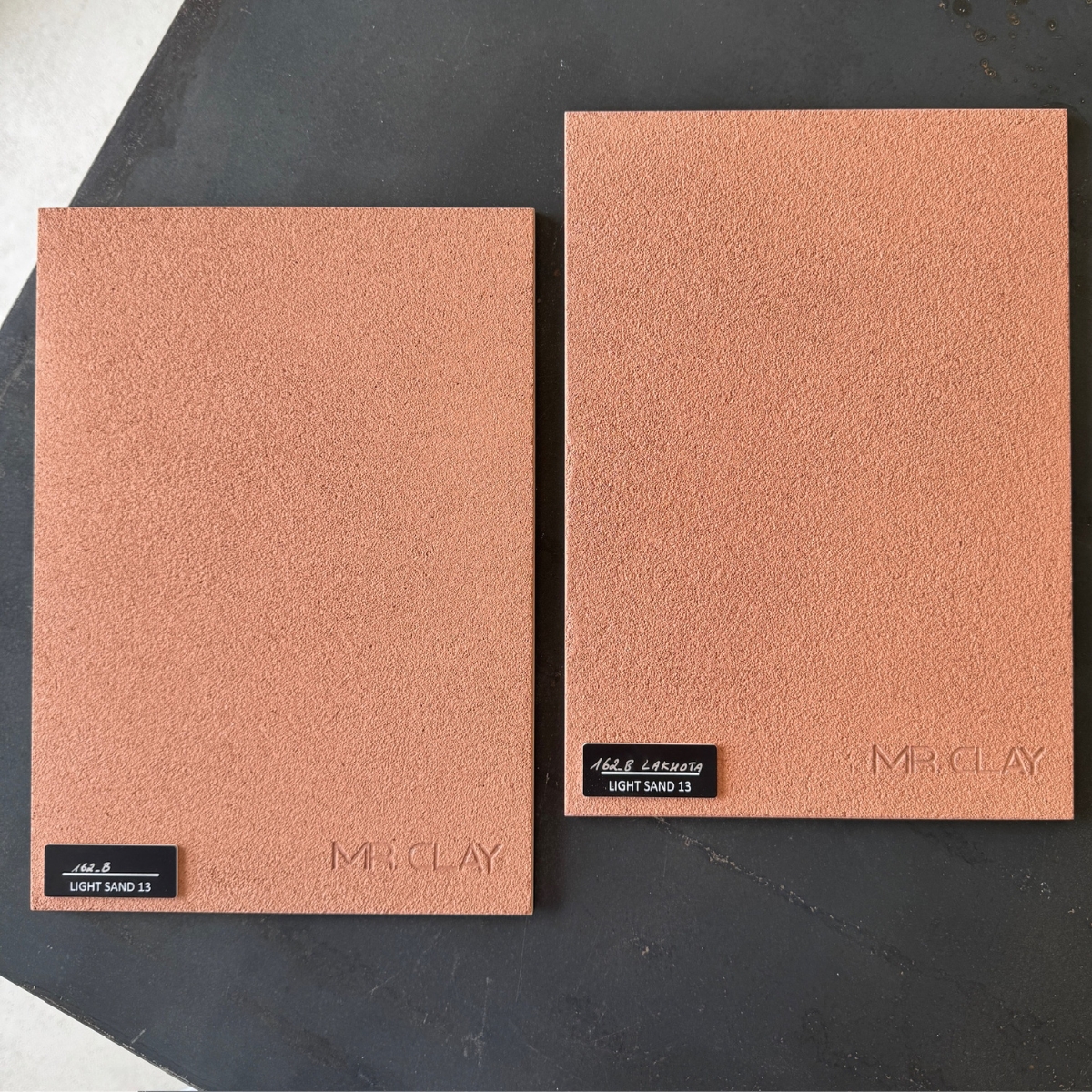
If you know you'll be varnishing, we recommend ordering a color sample with varnish to preview the final result. You can order a sample [HERE].
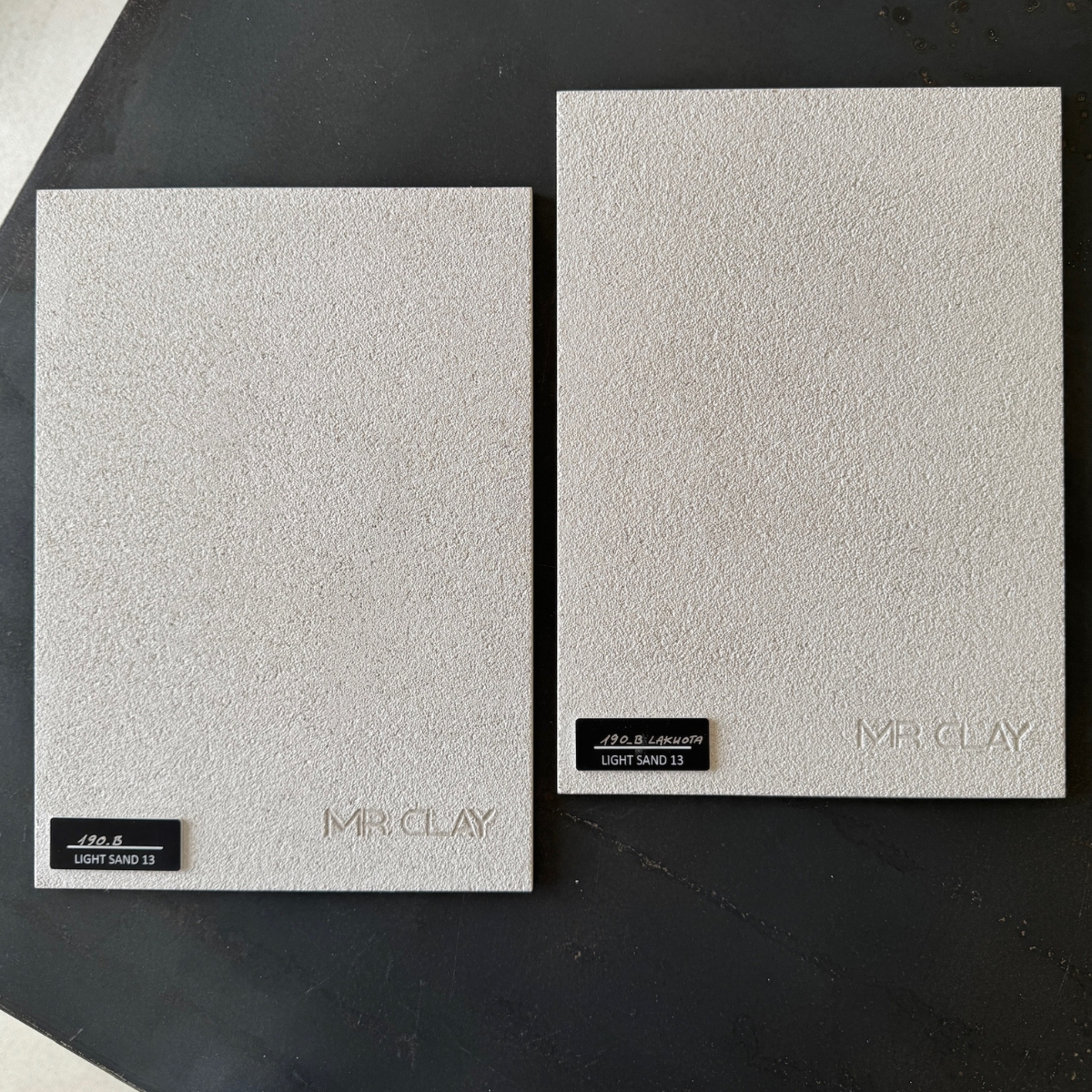
We also provide comparison samples to show potential color differences between varnished and unvarnished walls.

For walls in dry and low-traffic areas, one coat of varnish is sufficient.
In areas where higher friction, staining, or splashing is more likely, two coats of varnish are recommended.
- Do not pre-outline corners (inner or outer) ahead of time. Doing so may cause visible overlaps or blotches when fresh varnish hits already absorbed varnish.
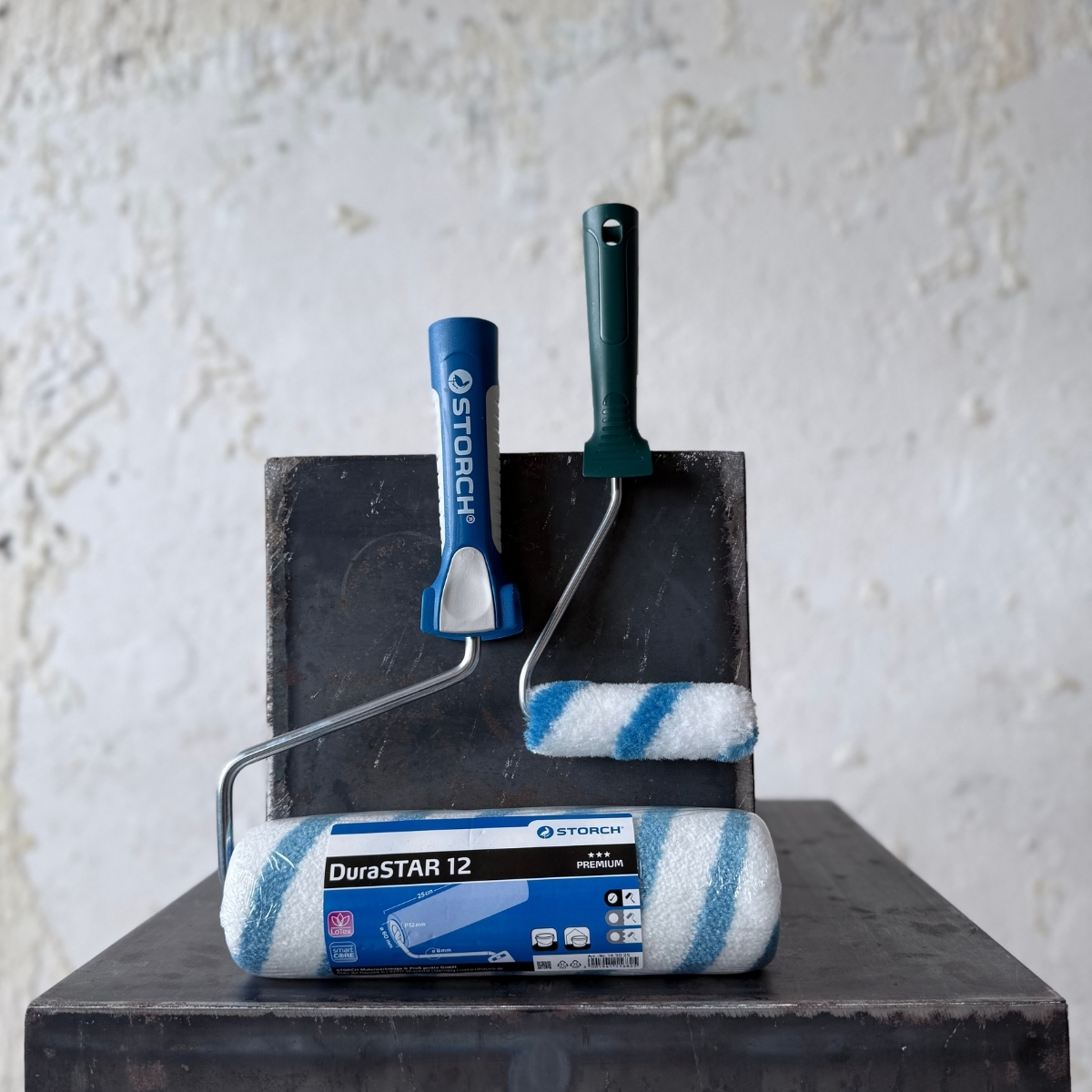
- Do not use any tools other than a roller.
Some use brushes or dab into hard-to-reach corners — this almost always leads to visible dark patches. Use a smaller roller for those areas instead.
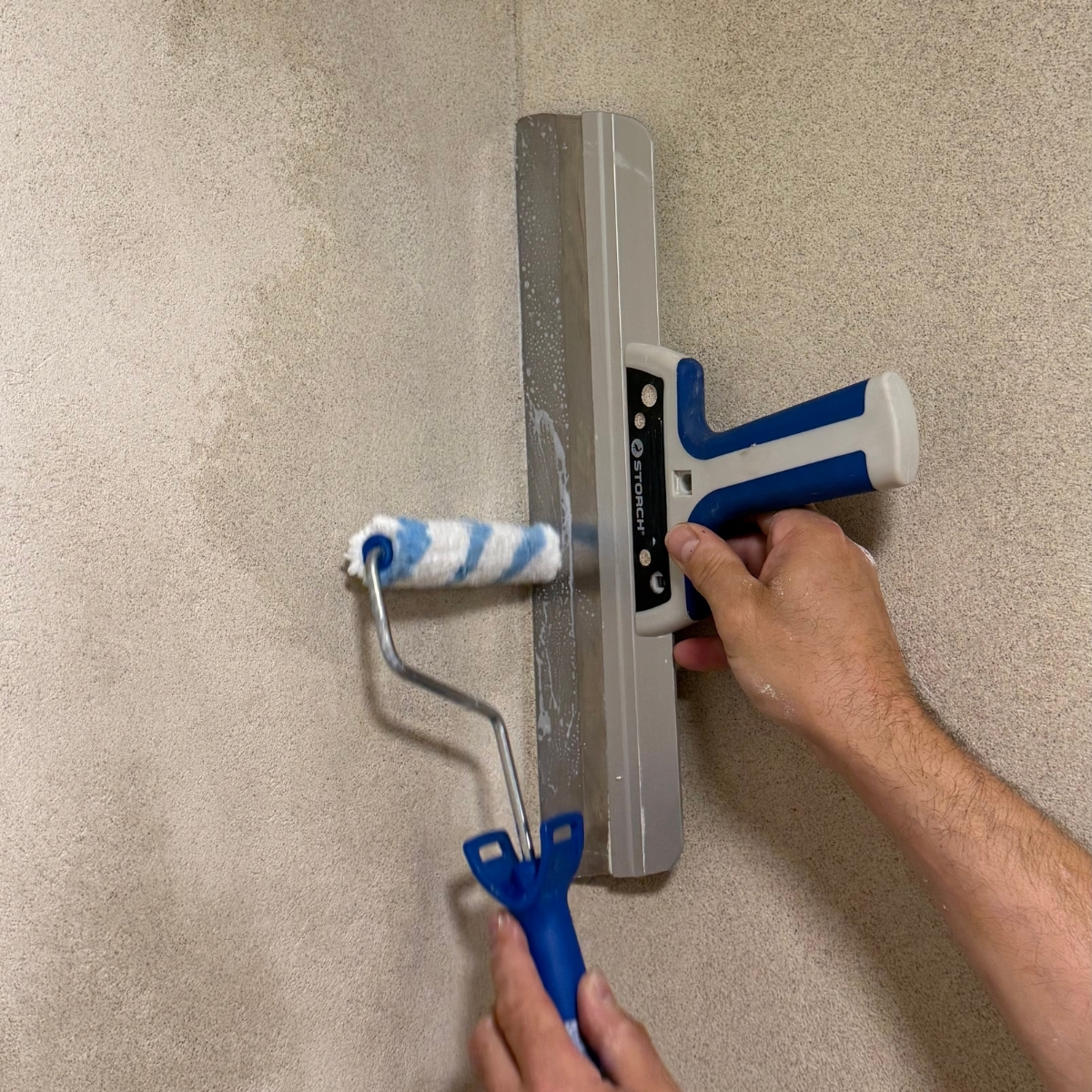
- Protect adjacent walls in corners with Washi masking tape, so the roller doesn't touch neighboring surfaces. If you need to varnish both walls at once, insert a putty knife into the corner while rolling.

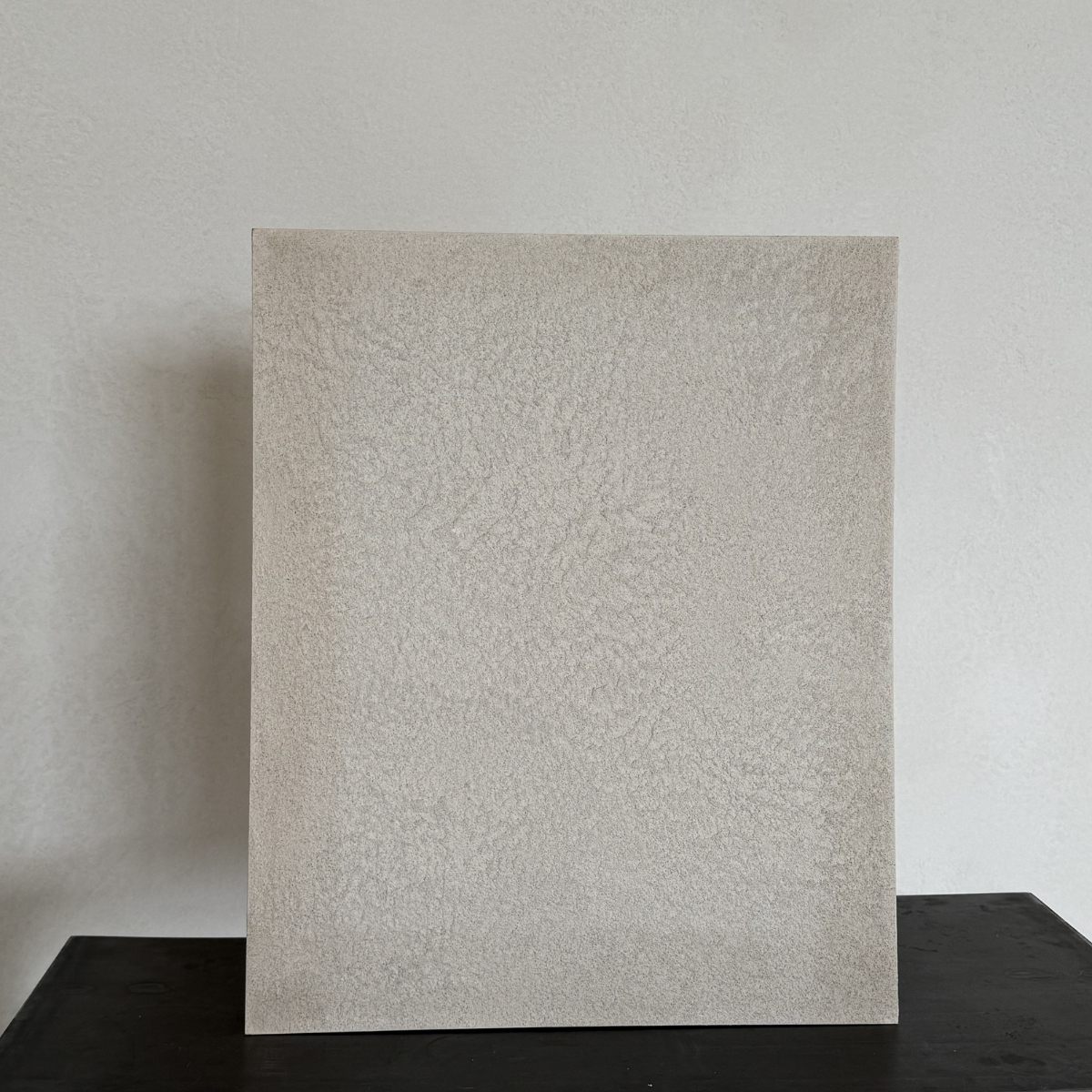
- Apply the varnish evenly, gradually increasing the area while using a sufficient amount of varnish. Start in the upper left corner and expand diagonally. Do not apply in straight, random strokes or with too little varnish, as transitions will be clearly visible, as shown in the image below.
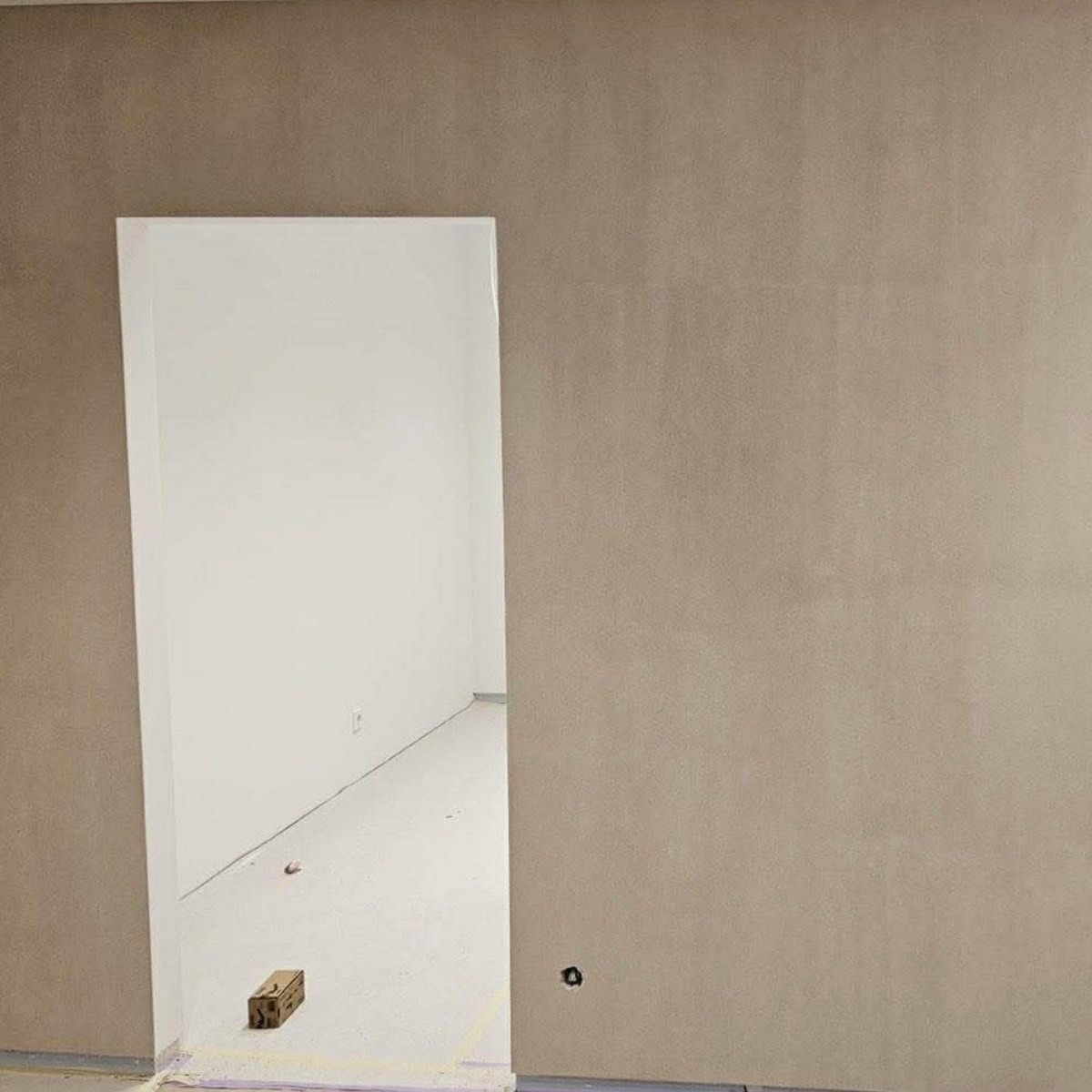
First time varnishing? Start with one or two walls, let them dry, evaluate the result, and only then continue.
Regardless of how resistant the varnish is:
Always test this method in a small area first.
In theory, yes – natural varnishes exist on the market.
But based on our experience: they don’t work. Cleaning and maintenance remain the same as on uncoated walls, and the finish often changes the wall color significantly or applies unevenly.
So we believe it’s not worth spending money on ineffective wall protection.
It’s simpler and more cost-effective to learn how to care for and refresh natural clay plaster walls, which is very doable.
All articles on this blog are the intellectual property of Mr. Clay. If you’d like to use any part of the content, please contact us.

Clay plaster is designed to be completely natural and vapor-permeable. Please carefully read the information on how to maintain, clean, and repair such walls so that your clay plaster continues to bring you joy for many years. And remember — if needed, clay plaster walls can always be varnished with a durable protective varnish.