Clay plaster – a sustainable choice
Sustainability in Interior Design: Why Clay Plaster Is an Eco-Friendly Choice
We increasingly hear the word “sustainability” in many contexts, especially in construction and interior finishes. But how many of us have truly grasped what it really means? Public sources define sustainability as follows:
Sustainability is the ability to meet the needs of the present without compromising the ability of future generations to meet their own needs. In other words, it is a way of living and working that does not deplete natural resources, causes no irreversible environmental damage, and is based on a long-term perspective.
What Does Sustainability Mean in Interior Design?
In interior design, sustainability means consciously creating living environments that are healthy, long-lasting, resource-efficient, and environmentally friendly—both during production and throughout use. This involves everything from material composition to climate impact and recyclability.
Sustainability is composed of three core dimensions:
-
Environmental sustainability: low CO₂ emissions, renewable resources, recyclability
-
Economic sustainability: local raw materials, efficient production processes, low costs
-
Social sustainability: safe and healthy environments, ease of use without special training, promoting community, independence, and inclusiveness
This article explores how the production and use of clay plaster contribute to sustainability on a global scale.
Raw Material Extraction
Most mineral-based interior mixtures use similar fillers—various grades of marble or sand. The main difference lies in the binding agent (clay, lime, cement, or gypsum) and added components. From a sustainability standpoint, the most significant variation in CO₂ emissions comes from how these binders are extracted and processed.
We’re proud that clay, as a raw material, has the lowest environmental impact today—significantly outperforming lime and cement.
| Material | Energy Use for Extraction/Processing (MJ/kg) | Description |
|---|---|---|
| Clay | 0.3 – 0.7 MJ/kg | Usually mechanically extracted (digging, drying); no burning involved |
| Hydrated Lime | 3.5 – 5 MJ/kg | Requires burning calcium carbonate at ~900–1100 °C |
| Portland Cement | 4.5 – 7 MJ/kg | Extremely energy-intensive process at up to 1450 °C |
Even ceramic production produces zero waste, as everything is reused. If greenhouse gas emissions need to be reduced even further in the future, extracted clay could simply be air-dried naturally, without using fossil fuels. In contrast, lime and cement require high temperatures, leading to significant energy consumption and CO₂ emissions.
Clay Plaster Production
The manufacturing process of clay plaster—mixing dry mineral raw materials—is simple and quick. As a result, the energy used per unit produced is relatively low.
Manufacturing Waste
There is no production waste or wastewater generated during the clay plaster manufacturing process. The only items needing recycling are the packaging materials of the dry raw ingredients—mostly paper bags.
Packaging & Storage
-
Dry clay plasters do not require heated storage spaces or temperature-controlled transport.
-
Product quality is not affected by warm environments, so no cooling systems are needed.
-
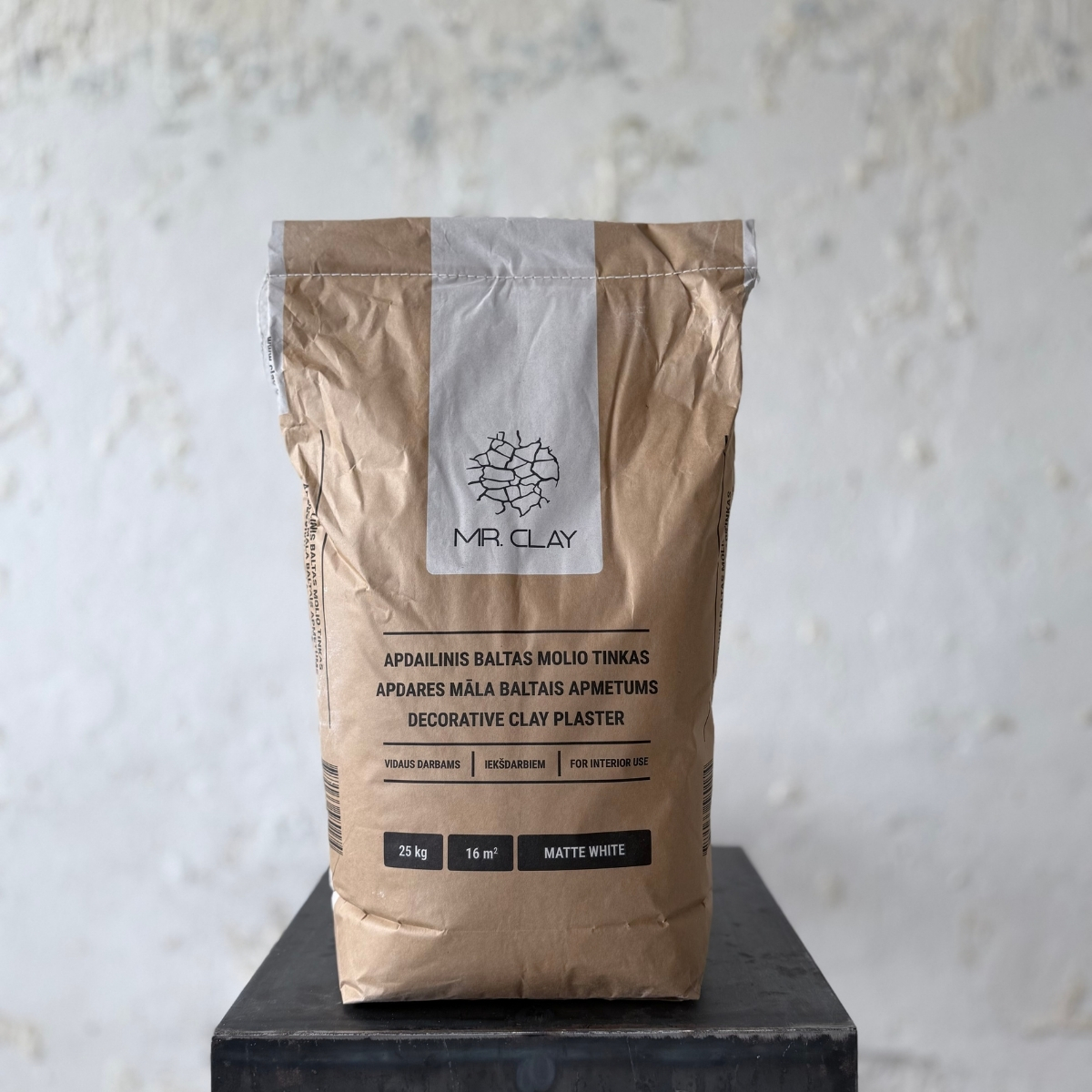
Clay mixes are packaged in paper bags.
Product Shelf Life
Dry clay plaster mixes and mineral pigments have a very long shelf life—some products should be used within 3 years, others have no expiration date. This minimizes the risk of waste, both for us and for our partners and clients.
Once mixed with water, the ready-to-use wet clay plaster can sometimes be reused even after several months, if stored properly. In comparison, many cement- or gypsum-based plasters must be used within minutes of mixing, otherwise they harden irreversibly and must be discarded.
Clay plaster never hardens in a sealed container. And even if it does dry out—it can be rehydrated with water and used again.
Circular Economy in Practice
It might sound too good to be true, but clay plaster is one of the very few wall finishing materials that can be reused—truly supporting circular economy principles. If left unsealed (not painted or varnished), worn clay plaster can be:
-
Thoroughly wetted and gently scraped off the wall, dust-free
-
Collected into a container and soaked in water
-
Mixed well
-
And reapplied
This reverse process is not possible with cement, lime, or synthetic decorative coatings—they harden permanently and become waste.
Clay plaster is not a single-use product. It returns to the material cycle—a real example of circular economy in interior design.
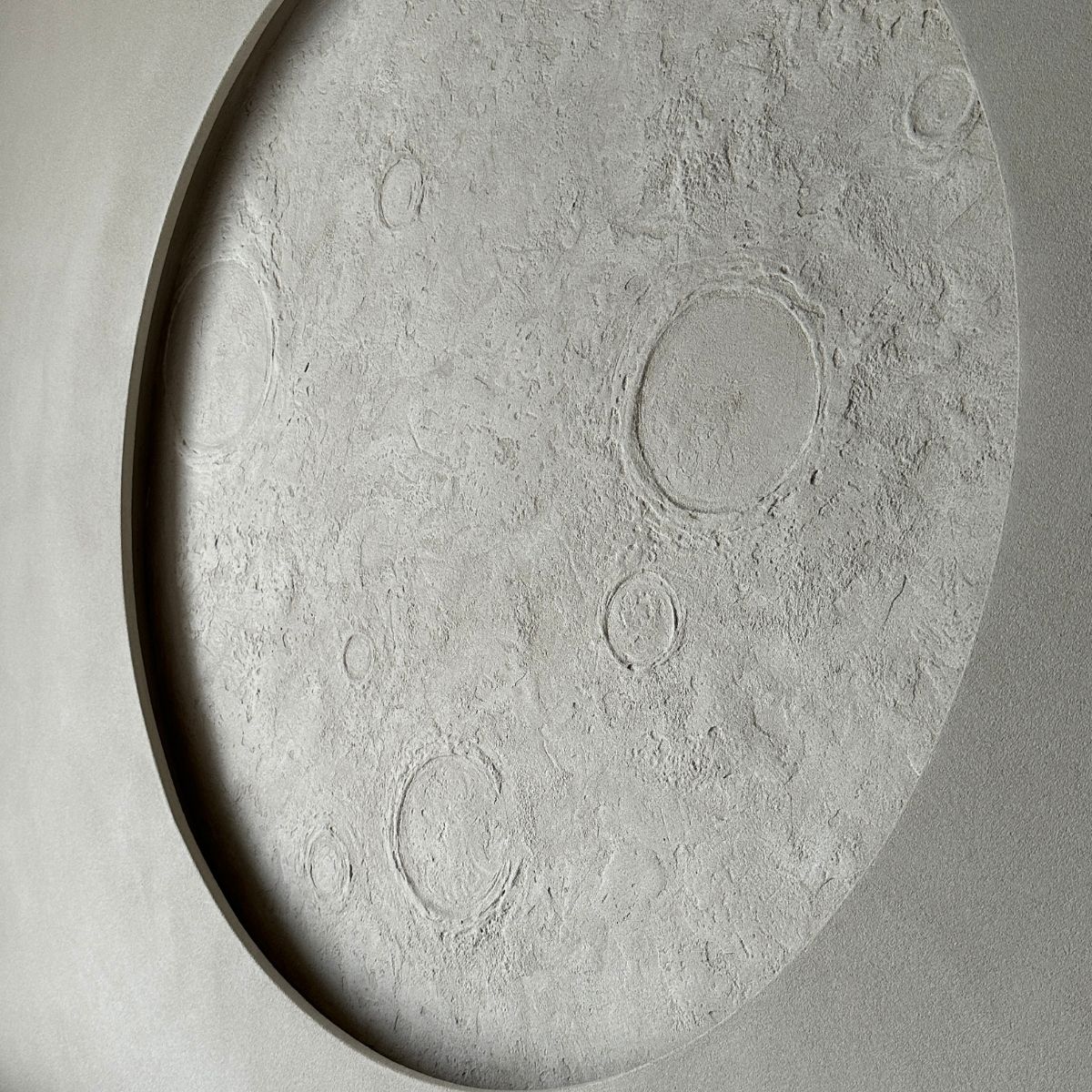
Sustainable Finishes = Healthier Walls + Less Future Waste
We've received many requests to produce pre-mixed wet clay plasters, and we understand that this would make things easier for craftsmen. However, we always say NO to this idea, because:
-
It would require the addition of preservatives and chemical additives
-
Pre-mixed products would need constant temperature control, increasing energy consumption and costs
-
Packaging would require plastic containers, not paper
-
Wet mixtures would be bulkier and heavier to transport
-
Shelf life would shorten, increasing the risk of waste and financial losses for producers, partners, and clients
In this article, we've briefly outlined how clay plaster contributes to sustainability. We invite you to read our other articles to learn more about this unique material in various contexts.
All articles on this blog are the intellectual property of Mr. Clay. If you’d like to use any part of the content, please contact us.