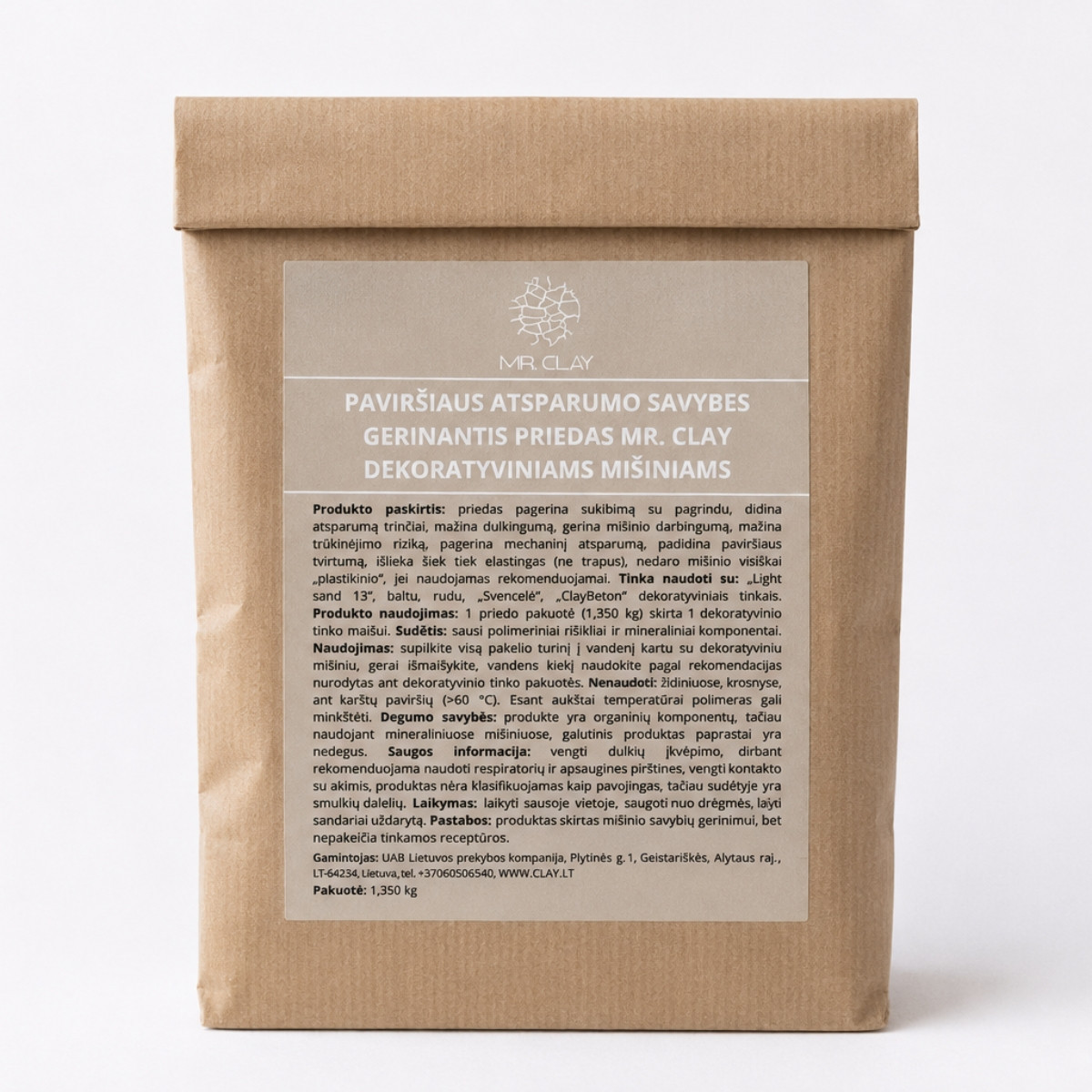
Polymer additive for decorative plaster durability
A polymer additive mixed in while you prepare the plaster — it improves the surface resistance to scratches and knocks, and the wall stays vapour-permeable. One pack covers one bag of plaster, roughly 16–17 m² of wall, and adds only 0.82 EUR/m² to the cost — the difference is easy to see.
Loyalty programme: the value of this product counts towards „LOYAL 10“. Accumulate 2 000 € and receive a 200 € discount coupon. Register →
A polymer additive mixed in while you prepare the plaster — it improves the surface resistance to scratches and knocks, and the wall stays vapour-permeable. One pack covers one bag of plaster, roughly 16–17 m² of wall, and adds only 0.82 EUR/m² to the cost — the difference is easy to see.

Safe purchase
.svg)
Home delivery

Refund
A dry powder polymer additive, mixed in with the water while you prepare the plaster. Once dry, the wall becomes far more resistant to surface damage — scratches and knocks. The additive also improves adhesion to the substrate and reduces both dusting and the risk of cracking. The surface stays slightly elastic rather than brittle — the mix does not turn "plastic". Most importantly, the wall stays vapour-permeable, so it keeps the very quality clay plaster is chosen for.
Two things every applicator notices. First, the mix does not harden in a covered bucket — no rushing, and no leftovers thrown away. Second, it dries more slowly on the wall, so there is more time to level it, shape the surface and join areas without visible transitions. The additive has no smell, so the work can be done in an occupied home.
One difference matters: once dry, a wall made with the additive is harder to reactivate with water. If your technique relies on re-wetting and reworking an already applied surface, choose the additive deliberately — a second chance to correct the surface will be harder to get.
The additive can slightly affect the shade — though not with every colour, and not always. Across a corner the difference is not noticeable, because the light falls differently on each wall. Even so, we recommend using the additive on all the walls in a room.
Yes. You can plaster as many new layers as you need over a wall made with the additive — the wall can still be refreshed.
One pack (1.35 kg) is intended for one bag of any decorative plaster — roughly 16–17 m² of wall. It adds only 0.82 EUR to the price of a square metre.
The additive strengthens the surface itself, but it does not form a film. If the wall has to withstand liquids and damp cleaning — in a hallway, a commercial space, or on decorated furniture — it needs two coats of MR. CLAY varnish once dry. The additive in the mix plus varnish on top is the combination that gives genuinely durable walls.
How to varnish clay plaster properly
Pour the entire contents of the pack into the water together with the decorative mix and stir well. Use the amount of water recommended on the plaster packaging.
Composition: dry polymer binders and mineral components.
Do not use in fireplaces, stoves or on hot surfaces (above 60 °C) — at high temperatures the polymer can soften. The product contains organic components, but in mineral mixes the final product is generally non-combustible. The additive improves the properties of the mix; it does not replace a correct formulation.
The product itself is non-toxic and is not classified as hazardous. It is a fine powder, so avoid inhaling dust while pouring — work with a respirator and protective gloves, and avoid contact with the eyes. Store in a dry place, tightly closed, protected from moisture.




There is really no need to varnish clay plaster walls — it all depends on your lifestyle and your specific needs.
If you want completely natural and vapor-permeable walls, don’t use any varnish. Simply read our recommendations on how to clean and repair natural walls — trust us, they can stay beautiful and clean for many years.
If you need durable, wet-washable walls — for example, in high-traffic areas or commercial spaces — be sure to varnish the surfaces with Mr. Clay Varnish No. 1.
You can find more information about varnishing HERE
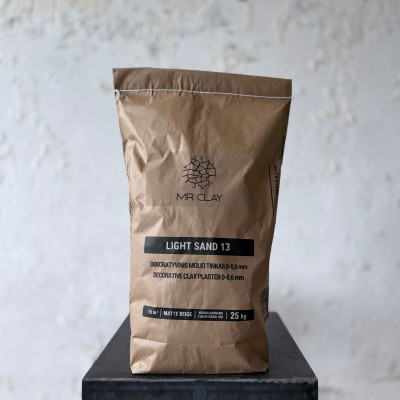
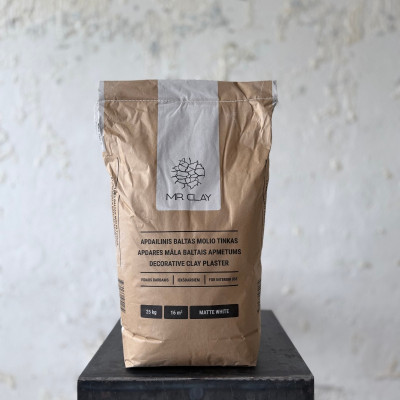
They differ in their base colors: one is light sand–colored, and the other is warm white. When tinted with the same pigments, the resulting shades are very similar. The biggest difference is that Light Sand 13 dries more slowly during application and creates slightly more shading, which is why it is currently the most popular mixture for finishing large wall and ceiling areas.
White decorative clay plaster is an excellent choice if you need a white base, softer shading, or if you’ll be doing highly compressed decorative techniques. But in most cases, both mixtures can be used for almost any technique.
Clay plaster “breathes” — it absorbs and releases moisture, which makes it very beneficial for maintaining a healthy indoor microclimate. If the surface is not varnished, it remains slightly more sensitive to mechanical impact, but it does not crumble or smear. An occasional loose marble grain falling off is completely normal for a natural product.
If the surface feels noticeably dusty or smudgy when touched, it means something was not done quite correctly during the finishing process. In that case, you can try a few additional steps: brush off the loose marble grains with a dry brush or clean palm, or thoroughly moisten the wall and compress the entire surface using a stainless-steel trowel to harden it.
Of course, you can always varnish the wall to fully stabilize the clay plaster if vapor-permeability is not essential for your wall finish.
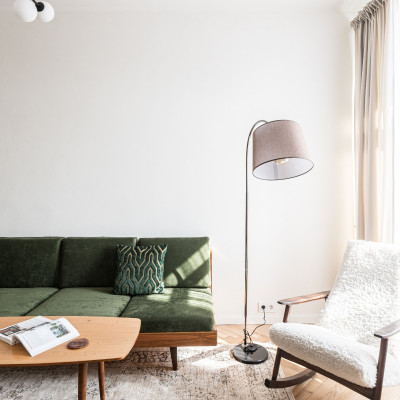
Yes, most people choose to finish all the walls and ceilings in their home with clay plaster. The result is incredibly beautiful and cozy! The walls create soft, warm shading — just enough to add charm, but not so much that it becomes overwhelming. You’ll never get tired of it. On the contrary — as our clients say, you’ll want to come home just because of your walls and won’t be able to look at flat-painted ones anymore! :)
You cannot use clay plaster or this varnish in the shower area, near the bathtub, or in any zone with frequent direct water contact and high steam concentration. These areas are not suitable for clay plaster or its varnish.
In the bathroom in general:
For other walls, ceilings, or areas near freestanding bathtubs or sinks — where there is no long-standing water and no intense hot steam — clay plaster can be used. In bathrooms, we recommend varnishing clay-plastered walls for practicality. If you know you will be careful and protect the surface, varnishing is not strictly necessary.
Ceilings do not need to be varnished.
Because clay mixtures are natural and contain no chemical substances that form a film, clay plaster remains vapor-permeable and “breathable.”
Such walls should not be heavily scrubbed with water, as the cleaned area will definitely remain visible. However, we have discovered some very effective methods for cleaning clay plaster, and considering that it is a fully natural, matte, and very beautiful material, its durability and usability are quite good — in many cases comparable to matte paints.
You can find more information about cleaning and repairing dents HERE.
If you are looking for more durable wall surfaces, clay plaster can be varnished with Varnish No. 1, making the walls wet-wipeable.